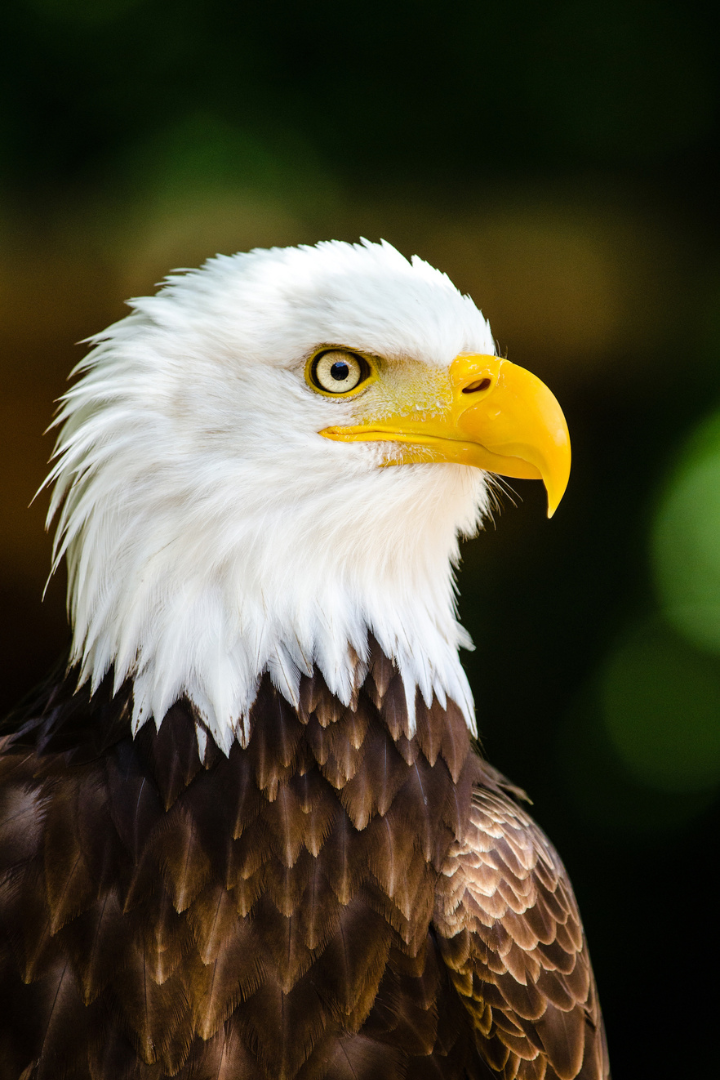
Dr. Jonathan Sleeman releases his first bald eagle during the 2025 Fall Raptor Release at Carpenter Nature Center. | Photo by Les Conrad
The Raptor Center (TRC) is the definition of excellence in raptor medicine, rehabilitation, and conservation. Each patient, volunteer, supporter, and staff member has been part of building a legacy that reaches far beyond Minnesota’s skies. Now, as TRC enters its next half- century, that legacy is being carried forward by a new leader, Dr. Jonathan Sleeman, the Patrick T. Redig Endowed Chair in Raptor and Ecosystem Health and Executive Director of TRC.
“What excites me most is the potential I see,” Dr. Sleeman shares. “The Raptor Center is already recognized as a world leader in raptor clinical care and conservation, thanks to the vision and dedication of the previous directors, staff, and volunteers. The opportunity to build on this legacy, grow in new directions, and expand the impact of our work is incredibly exciting.”
The role of the Redig Endowed Chair and Executive Director
The Executive Director of TRC provides strategic leadership for every aspect of the organization’s mission. They oversee our renowned wildlife hospital, guide education and outreach programs that reach more than 100,000 people every year, lead TRC’s scientific work, and foster national and international partnerships that amplify our global impact. It is a position that requires balancing the immediate needs of injured raptors with long-term strategies to strengthen conservation, public engagement, and professional training.
Congruently, the Redig Endowed Chair is a distinguished faculty member within the University of Minnesota (UMN) College of Veterinary Medicine (CVM). Named after Dr. Patrick Redig, co-founder and director emeritus of TRC, the position honors his pioneering vision by ensuring that raptor medicine, conservation, and ecosystem health remain at the forefront of wildlife veterinary science. As endowed chair, the director carries the responsibility of advancing research that links raptor health to larger environmental and societal challenges, while also mentoring the next generation of veterinarians and conservation leaders.
The dual responsibilities of endowed chair and executive director also call for a visionary approach to environmental sustainability. This means advancing innovative science, cultivating philanthropic support to fund nearly all of TRC’s hospital operations, and preparing for the Center’s future facility and infrastructure needs. This means leading with both compassion and rigor, ensuring the welfare of every bird in our care, and strengthening TRC’s role as a global leader in raptor medicine, surgery, and rehabilitation. At its heart, the position embodies what makes TRC unique: a commitment to healing individual raptors while safeguarding ecosystems.
A global perspective, rooted in One Health
Dr. Sleeman’s journey to TRC spans continents and species. His career includes leading the Mountain Gorilla Veterinary Center in Rwanda, serving as Director of the U.S. Geological Survey’s National Wildlife Health Center, and most recently, advising international wildlife health initiatives in Asia through the UN Food and Agriculture Organization (FAO).
The common thread throughout Dr. Sleeman’s experiences is a One Health approach, recognizing the deep connections between the health of animals, ecosystems, and people.
“Raptors are top predators and highly sensitive to environmental change, making them sentinel species for ecosystem health,” he explains. “By documenting and analyzing the threats raptors face, from toxins to habitat loss, we can generate evidence that informs both wildlife conservation and public health.”
This ability to move seamlessly from the care of an individual bird to the health of entire ecosystems positions TRC to continue its growing role in advancing One Health solutions worldwide. As both a veterinarian and educator, Dr. Sleeman emphasizes that it is TRC’s responsibility to equip the next generation of professionals with more than technical skill. “Future leaders must first have exceptional clinical skills to care for individual raptors,” he notes. “But equally important is an understanding that these patients come from wild populations embedded in complex ecosystems.”
Connecting people and raptors

Beyond research and teaching, Dr. Sleeman sees a powerful role for TRC in fostering empathy and action in communities.
“One of my major concerns is society’s increasing disconnection from nature,” he says. “If we want to build a conservation ethic in future generations, it is vital that young people, especially those who may have limited access to nature, experience the power of wildlife firsthand.”
He highlights the transformative opportunities for groups such as under-served youth and veterans: “Raptors can be incredibly inspiring through their strength, resilience, and beauty. Encounters with them can spark awe, hope, and connection.”
For the volunteers and supporters who already bring TRC’s mission to life, his message is clear: “The passion, commitment, and generosity of our volunteers and supporters are the backbone of TRC. Without you, none of what we do would be possible.”
The Raptor Center’s global future
Looking ahead, Dr. Sleeman envisions TRC expanding its reach and reestablishing itself as a global training hub. By leveraging both in-person mentorship and digital platforms, TRC can increase its capacity to share its expertise with professionals around the world. He also points to new technologies as tools that can amplify TRC’s people power in research and conservation impact. His vision includes positioning TRC as a leader in shaping conservation policy, habitat restoration, and sustainable land use strategies worldwide.
“Success, for me, will mean TRC is thriving as both a clinical and scientific institution, with expanded global impact,” he says.
People behind the birds
As TRC embarks on this next chapter, Dr. Sleeman’s leadership embodies the theme of this issue: the people behind the birds. His vision aims to uplift the talents of TRC’s staff and build on decades of groundbreaking work in science, conservation, and education. With staff, volunteers, supporters, and partners all working together, The Raptor Center is poised not only to heal raptors, but also to shape a healthier future for the ecosystems we all share with them.