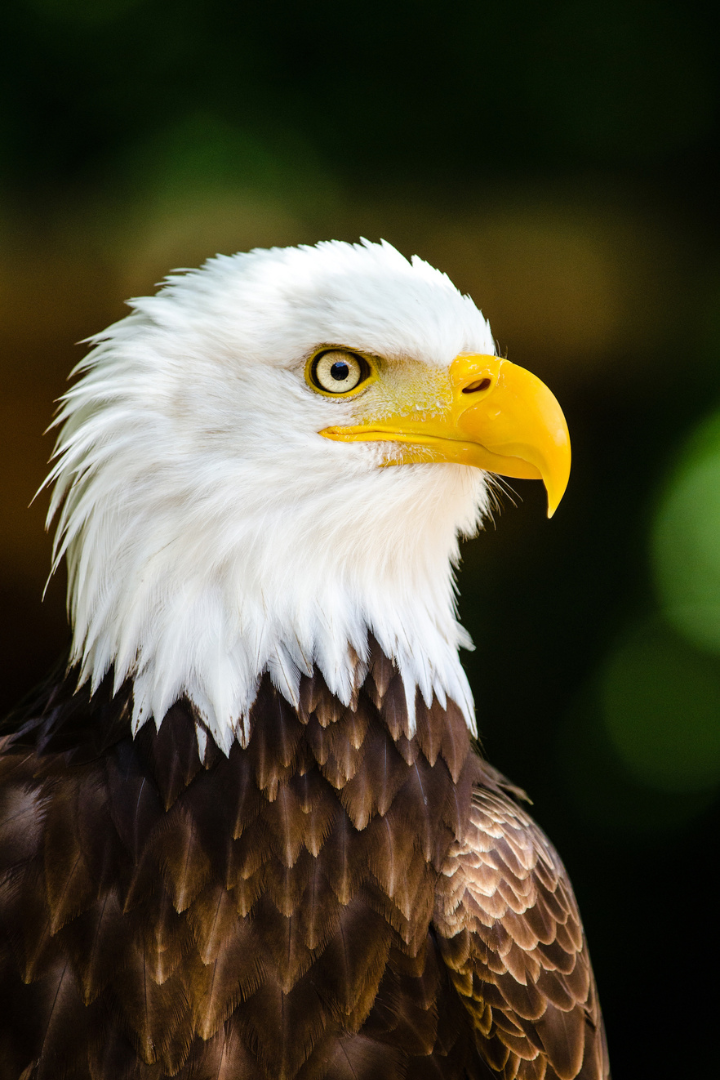
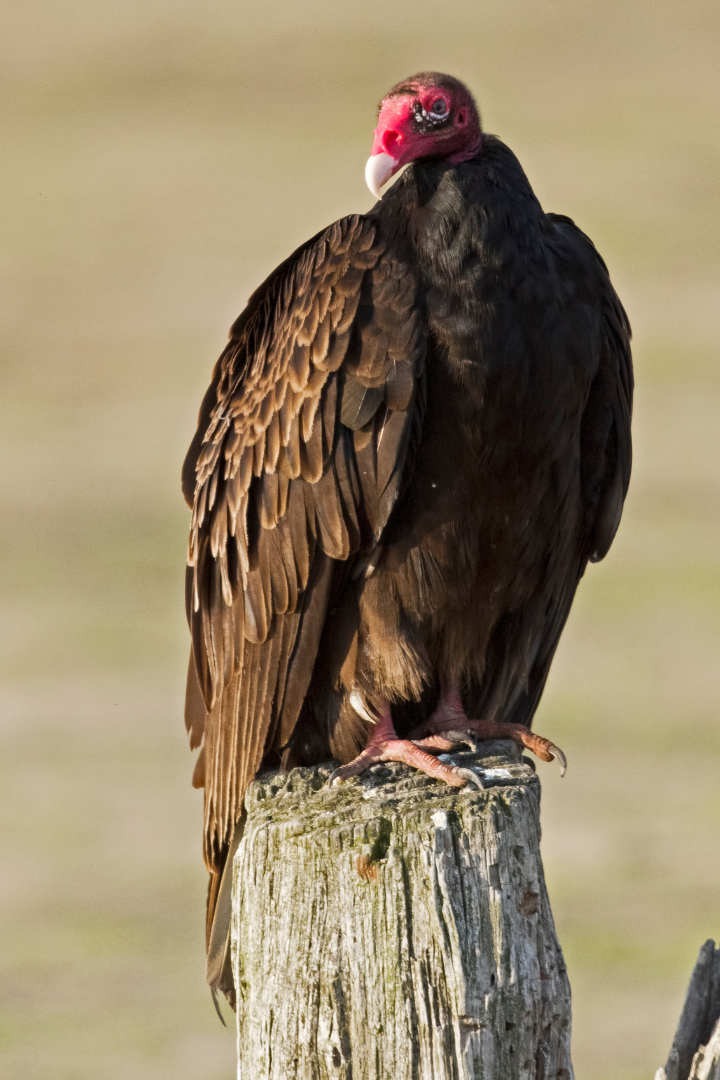
It’s the function and flare of an essential survival tool — so how do they differ between two of Minnesota’s largest raptors?
Beak shape and function can vary greatly between bird species, including raptors. Some species are considered specialists–such as fish-eating osprey–that are particularly adapted for hunting certain prey. On the other hand, generalist species, such as red-tailed hawks or great horned owls, readily hunt a wide variety of prey.
In Minnesota, we share the land and sky with two large and beautiful species: the resident bald eagle and the migratory turkey vulture. Both species have different tactics for acquiring food. Yet, they are both known for scavenging on the carcasses of deceased wildlife. So when it comes to their beaks, what makes them so different in the ways that they scavenge and survive?
Bald eagles are primarily piscivores, otherwise known as fish-eaters. However, they will readily scavenge on carcasses, from small mammals and birds all the way up to white-tailed deer. Their larger skull and thicker beak allow them to hold on tight to slippery food items and their beak, which takes up a third of their skull, gives them an edge in tearing off scraps from decaying flesh. During Minnesota winters, this can be especially useful when deceased animals quickly become stiff or frozen. Turkey vultures are open-range scavengers that do not hunt for their food, and they have a differently tuned instrument. Their impressive beak is narrower, deeply hooked, and proportionate to their smaller skull. Areas on carcasses that are considered tighter and tougher can, with precision, be twisted, torn loose, and consumed by vultures, opening up carcasses and providing greater access to food for other wildlife. Their ability to quickly twist and pull off morsels comes in handy when scavenging in social situations with other vultures where competition can become fierce.
Despite their differences, both the bald eagle and the turkey vulture have finely crafted physical attributes that allow them to survive in the wilds of Minnesota.