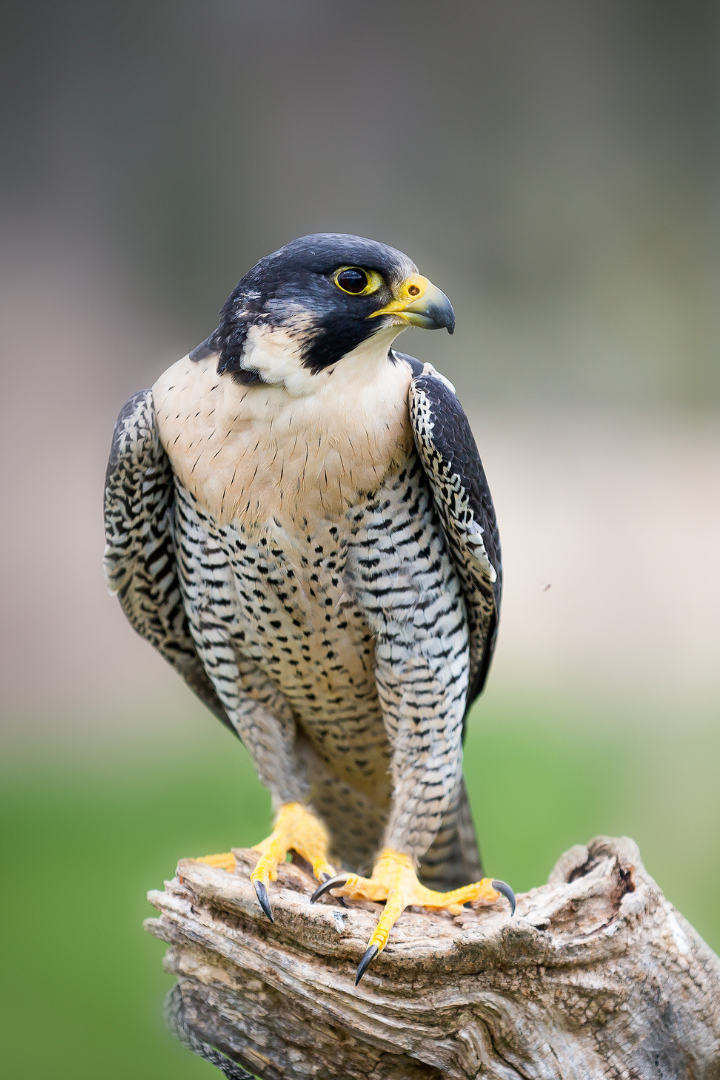
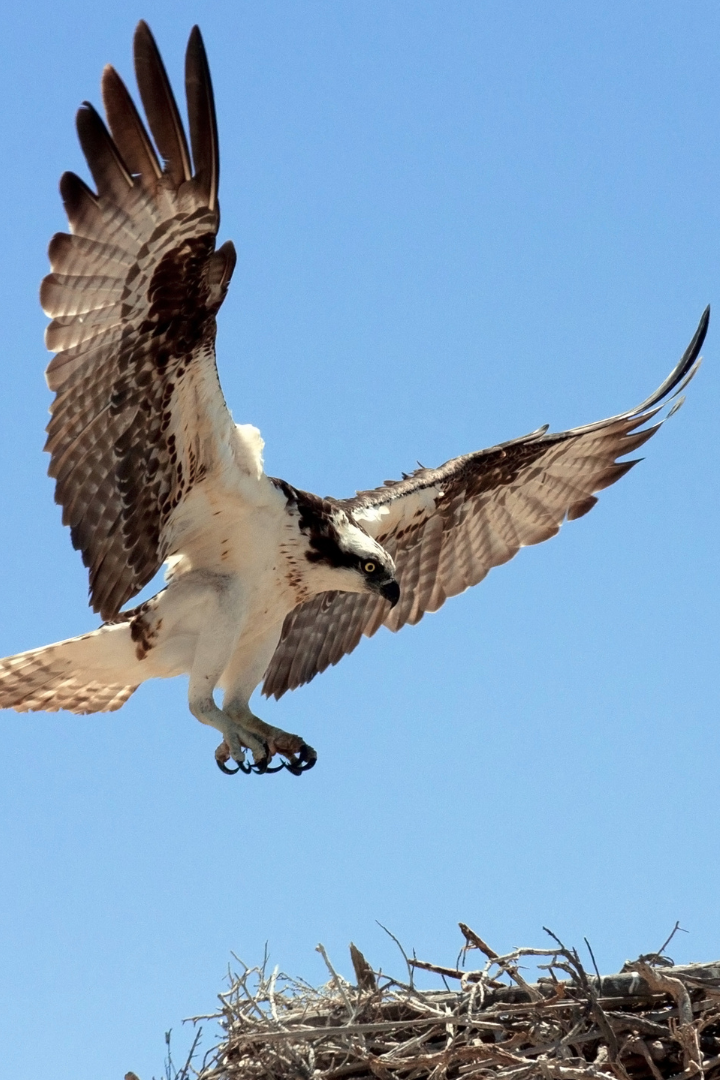
The talons and feet of raptors are super tools that tell each species’ story of survival.
To successfully hunt, perch, build, and grip, raptors need a precise super tool. The feet and talons of a raptor are one of the key features that differentiate them from the rest of the bird world.
One might assume that with the immense force with which a raptor can grab and hold onto its prey, it must have muscular feet. The surprising truth is that raptors have no muscles at all in their toes, or digits as they are called.

Raptors possess a self-locking system of rachets in their toes that are controlled by strong tendons originating from muscles higher up on their legs. When the muscles contract, the leg is shortened and the toes are pulled closed and held in place by rachets. To release its grip, a raptor straightens its legs to release the rachets’ lock.
Another notable feature of raptor feet is that the bottom has papillae (small fleshy bumps) that help with grip, like the tread of your shoes. Additionally, ospreys have small spiny projections called spicules that help them hold onto slippery fish.

For most species, digits 1 and 2 are considered the power toes, as they provide the strongest grip for securing prey. Bird-eating raptors, such as Cooper’s hawks and peregrine falcons, have additional adaptations. Their third digit is extra long and has a protruding pad that wraps around and grips their avian prey in the air.
Once you look past their intimidating, sharp claws, an anatomical understanding reveals there is so much more than meets the eye.